Application of PhotonAssay™ to Coarse-Gold Mineralisation – The Importance of Rig to Assay Optimisation
Why sampling — not assaying — is often the biggest source of error in coarse gold.
Why sampling — not assaying — is often the biggest source of error in coarse gold.
PDF · 29 pages · 2MB
Fill in a quick form to access the full document.
Why a standard 30 g fire assay charge is statistically likely to misrepresent true gold grade in coarse gold mineralisation — and what PhotonAssay™’s 300–500 g non-destructive analysis does differently
How fundamental sampling error (FSE) is calculated and applied to protocol design across low and worst-case coarse gold scenarios
Four case studies covering protocol comparison (fire assay vs. PhotonAssay™), laboratory splitting methods, and heterogeneity calibration using duplicate series analysis and X-ray computed tomography
The importance of QA/QC — CRM selection, OREAS recertification implications, and duplicate pair analysis — in any PhotonAssay™ gold assay programme
Practitioner recommendations for rig-to-assay protocol design that meets JORC and NI 43-101 reporting requirements
Related Resources
For those navigating reporting codes and due diligence when considering adopting PhotonAssay™.

A review of real-world PhotonAssay™ performance on heterogeneous gold ores — including coarse and nuggety mineralisation where conventional fire assay struggles most.
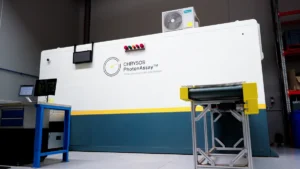
For those navigating JORC, NI 43-101, PERC and what "compliance" actually means.